
***Warning,
long post!***
This
post is an account of my experiences on the Shizuoka homestay. Indeed this post
is long, because the stay was long, and the things we did are many. Even if no
one reads this post, it was worth writing up to preserve the memories for the
future. Feel free to read some, and skip the rest. I have the theme for each
day's activities in the subheadings to try and be helpful.
 |
| Schedule for the week. To view full size, right click and select "open in new window/tab". |
Day 1: Saturday - arrival
10
foreign students, including me, arrived in Kakegawa city, Shizuoka prefecture
in the early afternoon. We came from various universities across Japan, the
more common ones being Tokyo University, Osaka University, and of course, TUFS.
There were masters students, undergrads, scholarship recipients, full fee
paying, the whole smorgasboard. The nationalities represented included
Singaporean, Vietnamese, Filipino, Chinese, Mongolian, Hungarian, Nepalese, and
Australian (guess who that was). We were briefed on the next 9 days, and met
our homestay families. Each student was assigned a different homestay family.
I was
taken in by an elderly couple, who had apparently been receiving homestay
students like me for the past 25 years! They've been very generous in enabling
foreigners to experience authentic Japanese life in their home.
 |
| A complimentary bottle of Kakegawa Tea to welcome us. |
 |
| Annual local Kakegawa summer festival. |
Day 2: Sunday - mountain sights and official welcome party
In
the morning, my homestay mum and dad took me for a drive into a nearby mountain
range. We checked out the numerous hydroelectric dam systems built into the
river that flowed down the centre of the mountain range, as well as a wine
cellar set up in a cave/tunnel built a long time ago (from memory, I was told
it was around the Kamakura period).


 |
| The Akiba dam, one of many we came across driving up the mountain. |


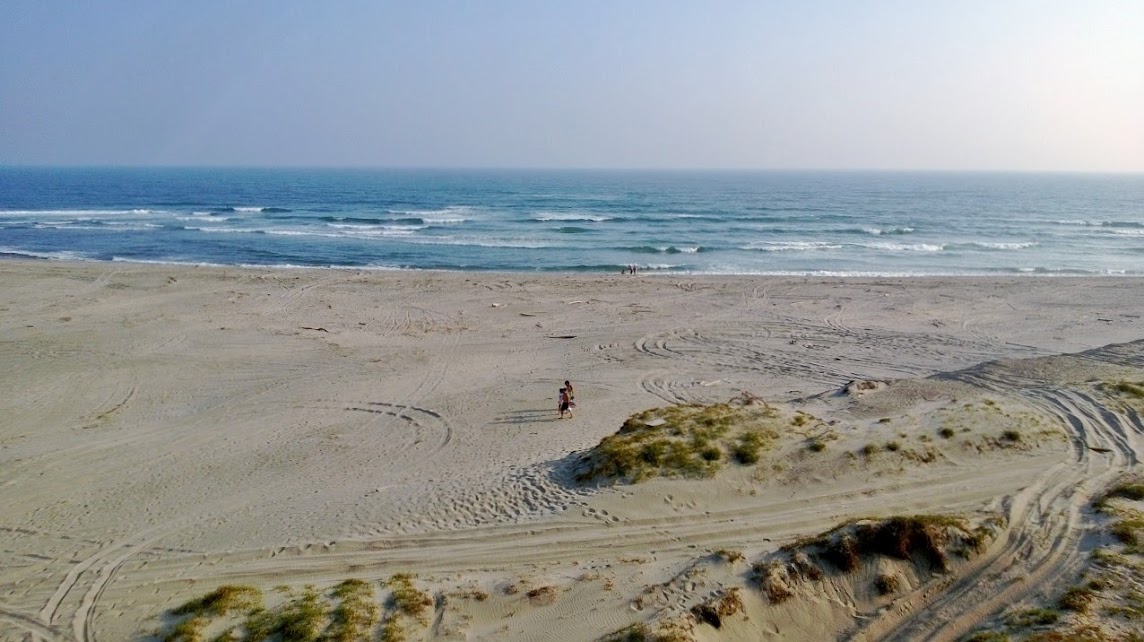
We
also had a quick stopover to admire the beach views, since Kakegawa faces the
ocean to the south. It was quite breathtaking. The beach itself wasn't as good
as Australia, but I gotta admit, standing so high above the sand was a rare
occasion.

In
the evening, we attended the official welcome party. Both students and homestay
families gave brief speeches. I tried to crack a joke during mine using my poor
incoherent Japanese, and from the (lack of) reaction of the crowd, clearly my
language failed me. Fortunately there were plenty of people giving speeches
before and after me to cover my shame.

There
was lots of food, and I definitely didn't hold back
on the plates and plates of sushi.
Day 3: Monday - A look around Kakegawa city
We
were told very clearly from the first day that this homestay was not to be
treated as a sightseeing trip, but that we were here to engage with Japanese
culture and to gain a better understanding of Japanese people. It confused me
why, then, the program contained so many aspects of a guided tour. I'm not
complaining though, cause we got to see some pretty special stuff even normal
sightseers wouldn't get to see.


Our
journey began with a face-to-face encounter with the Mayor himself at the Kakegawa City Hall, who also
happened to participate in the homestay program. Slightly jealous of the girl
who got to stay with the family of the mayor. She said that he was a really
kind, generous guy, and from our brief meeting with him in the board room, I
can see why. We spent the time hearing about what makes Kakaegawa unique, and
then were allowed to ask any questions we wanted about Kakegawa. He answered
our questions well. As a side note, the unique points of Kakegawa in a nutshell
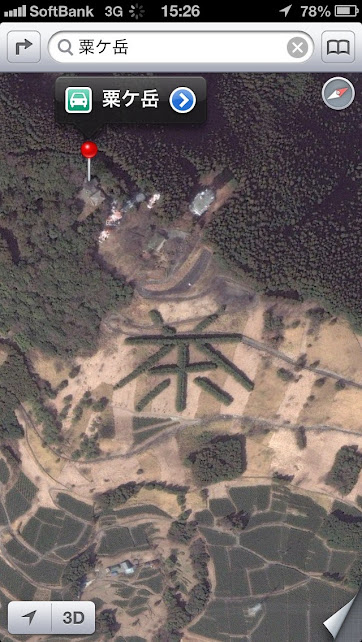
are tea and garbage recycling. Kakegawa is so famous for tea, they have
cultivated a tea plant in the shape of the kanji for tea big enough to see from
the sky. Note the size of the house beside it.
 |
| Kanji for tea, in Awagadake |
 |
| Discussion room for MPs. I got to be Mr Speaker for a day (more accurately, 10 seconds) :D |
Just
like a well planned tour, at the peak of our curiosity at what makes Kakegawa
such a national leader in waste disposal, we were taken to the garbage
incineration and recycling center to see it first hand.
We
saw the people employed specially to sort the incoming garbage, the cranes that
could move 1t of rubbish at a time for incineration, the huge rotating drums
where burnable rubbish was slowly roasted, and the end result 'slag' that would
be thrown away, taking up a mere fraction of the space the original rubbish
took up. Kakegawa city is apparently the lowest producer of rubbish in the
whole of Japan. One of the key elements to their success is requiring every
resident to write their names on their rubbish bags by law. If they don't, the
rubbish can't be taken away. This would clearly make the residents a lot more
attentive to what and how they are dealing with waste.


The
next stop, was souvenir shopping! Well, actually it was to observe a local
sweets factory producing cakes. We weren't allowed to take photos of the actual
production, but it was mesmerising to watch the cooks at work. It was
particularly impressive watching a senior baker make a quality melon cake in
record time. At the end of the tour, we were even given a souvenir gift bag.
Many of us additionally bought some gifts to bring back to our homestay
families and other friends.


In
our initial plan, we were going to the seaside, but the weather was dreary so
we went to visit a decomissioned nuclear power plant instead.


It
had been refurbished into a museum for nuclear power production. Examining the
models for the retaining walls, cooling mechanisms, and sturdy drums, and
watching the mini-presentations demonstrating how nuclear power plants
functioned, it honestly seemed quite legit. What drew my attention in
particular was the depth to which they buried the foundation for the retention
wall facing the sea, and the number of layers built into it, and how high up
above ground it reached. This theoretical model certainly seemed effective in
guarding against tsunamis up to 22m high, which sounds like a good safety
measure (for comparison, the
March 2011 tsunami was 14 metres tall). But the question that still remains
is, if they are so apparently safe, why the strong opposition? Obviously a 5.7
m high retention wall won't keep out a 14 m wave, an
issue pointed out to TEPCO well before the earthquake hit, but would a 22m
high wall have withstood this
same tsunami, after being shaken by the same magnitude earthquake?
According to earthquake statistics reported by the locals in Kakegawa, we may
not have to wait so long for a real tsunami to give us the answer.
After
the power plant visit, we were shown around the melon farm owned by one of the
volunteer organisers of this homestay program. He had 9 greenhouses
constructed, each housing about 100 melon plants each. Melons are a delicacy in
Japan, and he was growing the top dollar Musk melon. He explained to us how
each plant develops a number of fruit, but he only allows the single best fruit
on each plant to mature. That equates to 100 melons per greenhouse per harvest,
and 3.5 harvests a year (after maintaining constant conditions all years round
in the greenhouse) means 9 x 100 x 3.5 = 3,150. Assuming they are all top
quality melons, he can get about \3000 per melon. You do the maths.
He
explained to us that a good quality musk melon was to have green flesh, and an
even, well-developed net patten on the outside. Poor timing of harvest leads to
white flesh melons, and though taste wise you can barely tell the difference,
buyer psychology apparently causes a sharp drop in price if the flesh is not
green. Same goes for the netting - no connection to taste, but I suppose you
don't want to give an ordinary-looking melon as a souvenir. These are the kinds
of melons you'll find in department stores, and Ginza, wrapped up all nicely.
 |
| Department store premium musk melon, photo courtesy of a friend |
It
didn't occur to me at the time to take a photo of it, so unfortunately, no
melon farm pictures. But here's a plate of the same melons, generously provided
from his melon farm at our last communal dinner :)

Day 4: Tuesday - visiting relatives
I
spent this day with my homestay dad. We went to visit his younger brother, who
lived in a nearby town. Amazingly, he had deep interests in Japanese martial
arts, and he happened to know a lot about the history of Aikido! We initially
only intended to make a brief stopover, but we ended up talking for a large
chunk of the day. At the end, he copied some TV programs talking about Aikido
that he'd recorded some time ago, to give to me. I've already watched disc 1 of
3, and it's reinvigorated my passion to keep practicing Aikido for many years
to come. Looking forward to viewing the remaining two discs.
We
spent the remainder of the day preparing for the big day tomorrow…
Day 5: Wednesday - climbing Mt Fuji!
This
was the big event! We climbed My Fuji - and I made it to the top! :D
I
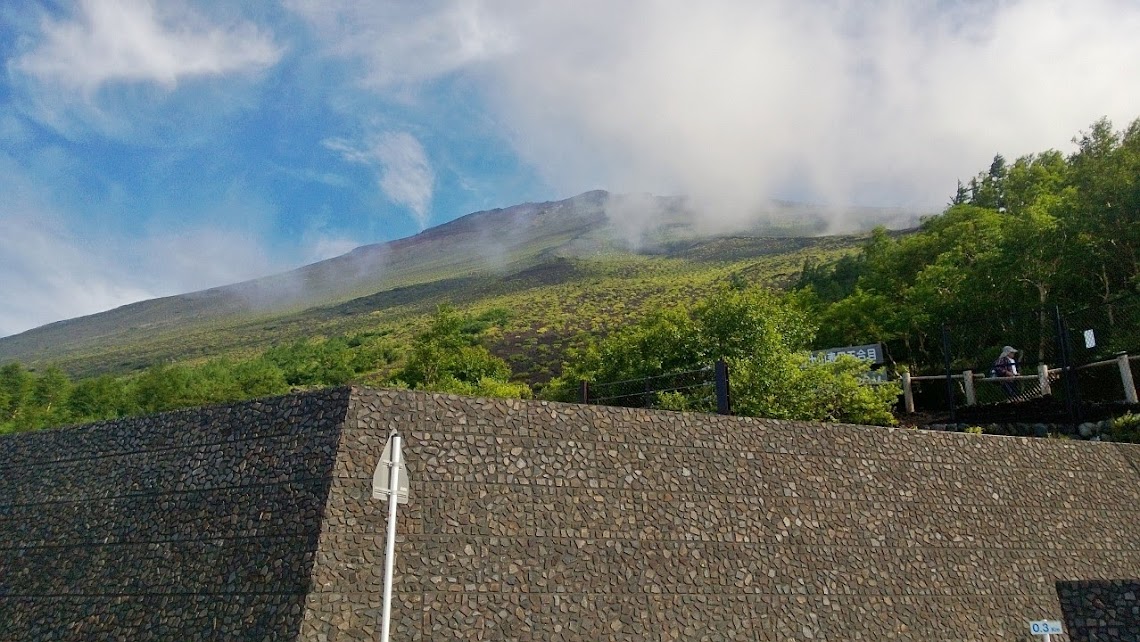
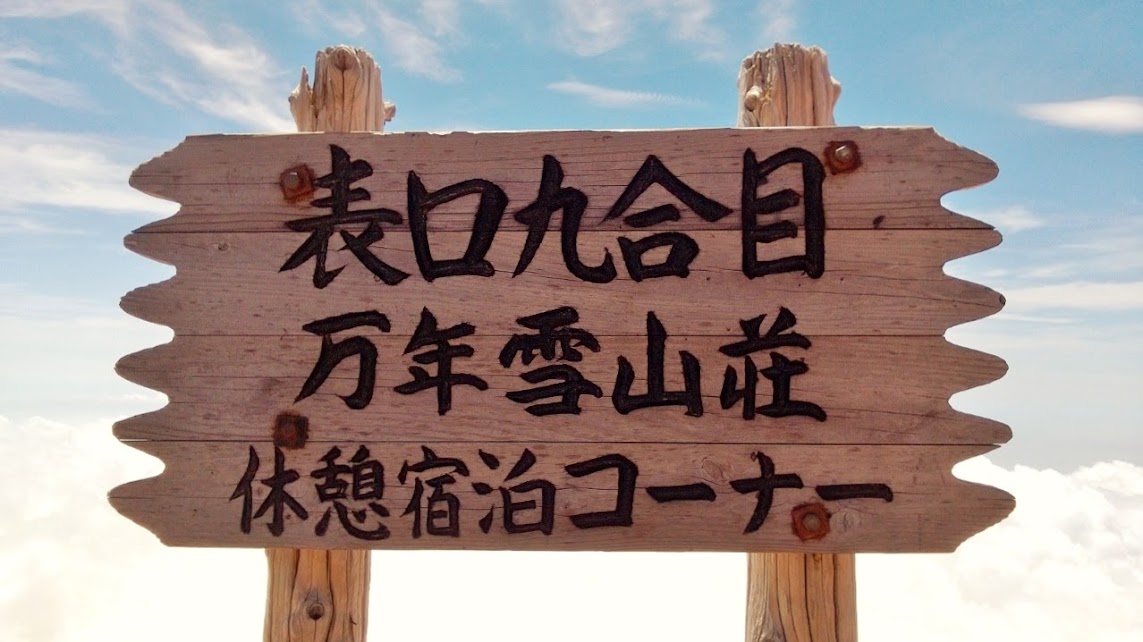
woke up at 2:30 am to get ready in time to board the bus departing Kakegawa
City Hall at 4:30. We began climbing at 8:30, and I reached the top at 12:30 -
a four hour climb. It was pretty fast, but I was beaten by the Hungarian guy (first) and the Nepalese guy (second) :P
 |
| warm up stretches |
 |
| view from base camp (5th Checkpoint) |
 |
| Yay reached first (sixth) checkpoint! |
 |
| Seventh checkpoint |
 |
| We're above the clouds! |
 |
| Look how steep this slope is |
 |
| Eighth Checkpoint |
 |
| Ninth checkpoint... yessss almost there! |
 |
| AND WE HAVE REACHED CHECKPOINT... nine and a half...? o.0 |
 |
| Finally reached the top@ |
 |
| What the crater of dormant volcano Mt Fuji looks like today |
However,
I held the record time for the descent - a mere two hours. We were required to
begin descending at 1:30 pm in order to make it back home in time, so we all
roughly started descending at the same time, though I hung back a little bit
with those who'd just reached the top before the cutoff and were recuperating.
On the way down, I overtook everyone and made it there first :D
We
got back after 10pm, and we were all ready for a good rest. Good night :)
Day 6: Thursday - tea factory visit
So
after a good sleep-in recovering from the full on day yesterday, we visited one
of the factories in Kakegawa that sorts and packages tea leaves. I learned a
lot about tea this day.
One
main thing I learned was the five main characteristics of tea - translated into
English, they are roughly sweetness, bitterness, fragrance, colour, shape. This
factory specialises in blending tea leaves grown in different areas of
Kakegawa. Some areas might produce leaves particularly excelling in fragrance,
others in colour, and others in shape. Producing the right mix for customers is
their job.
Another thing I learned was the difference between maccha (Eng: green
tea) and sencha (Eng: green tea). 抹茶 (maccha) is
powdered green tea, and it is added diretly to hot (or cold) water, mixed and
drunk as is. 煎茶 (sencha) is green
tea leaves, and is placed in a tea strainer, over which boiling water is
poured, and served from a teapot. In Japan, exclusively maccha is used for tea
ceremonies. Within households, the two are drunk interchangeably.


Check out the temperature differences... The left is the storage room. The right is the roasting machine.
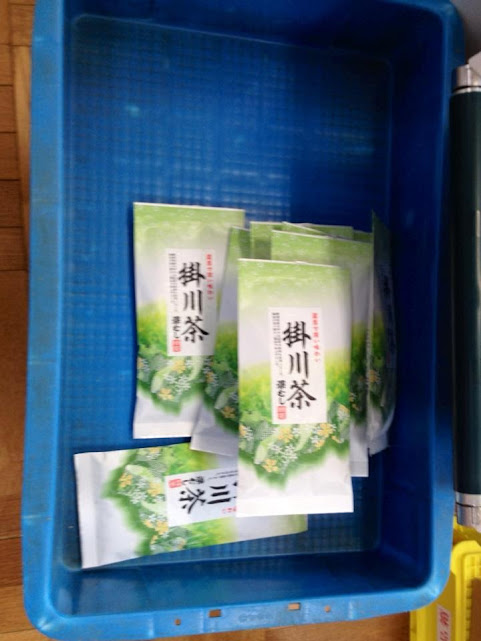 |
| Finished bags of tea |
Day 7: Friday - Kakegawa castle
Today
we visited Kakegawa castle. The grounds was bigger than I expected! The castle
itself was so-so, and now looks nothing like it would have used to on the
inside, since it's been turned into a museum. Having said that, the view from
the highest room in the castle is still good though. You can imagine how far
they would have been able to survey back then. The north end also had a great
view, but the staircase hand rail prevented me from taking a good photo. All in
all, a good cultural experience and insight.


Also,
check out this souvenir I bought! I've wanted one for so long. Know what it is?
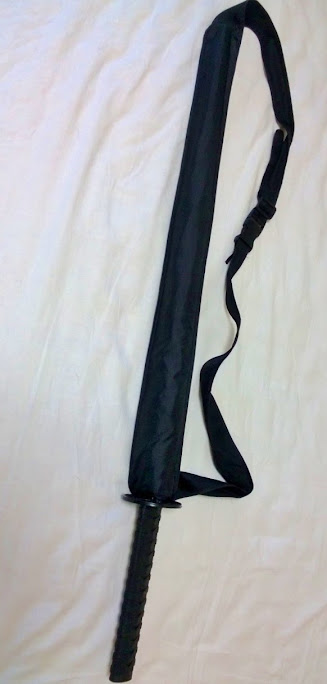
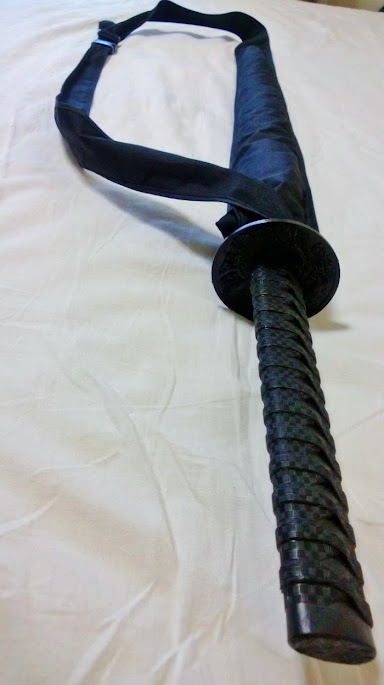
It's
an umbrella! Since I saw a friend in Australia carry it around, I've always
wanted one too. I've deliberately refrained from buying an umbrella until I
could get my hands on this. Looking forward to getting stopped by the police on
the street when I'm carrying this around.

The
shop where I found the samurai sword umbrella was actually exhibiting
tradtional Japanese wartime culture of all sorts. There were numerous armour
sets like this lined up, but each had a different colour scheme and a different
ornament on the front of the helmet. Japanese soldiers of that time fought very
differently to the covert military style of today. They would have considered
camouflage pattern to be cowardly, instead letting the enemy know loud and
clear that they are here as a worthy contender. One set of armour even had a
huge target painted on the breastplate, as if to say "hit me if you
can!". Fascinating difference in perspective.
Day 8: Saturday - Dipping into Japanese culture
 This
was our final formal day of planned activities in our homestay.
This
was our final formal day of planned activities in our homestay.
The
first stop was to meet some Japanese kids at a cultural exchange event held at
the library. We introduced each other, played some interactive quizzes
together, and divided into tables to fold origami. Japanese kids are so cute.
But they're apparently getting more and more misbehaved each year. This was the
first year in which a kid poured I think it was juice on one of the foreign
students' heads (in a naughty but playful way). The organisers unanimously
agreed that this crossed the line of inappropriate conduct. Changing culture,
maybe?
No
photos of the children for privacy reasons, but here are the boxes our table
made.
We
participated in a tea ceremony, where we sat traditional Japanese style,
causing me to lose feeling in my legs and spending several minutes learning how
to stand again afterward. But all in all it was nice. It was more of a
demonstration rather than a participation though, and I didn't really learn
much about history, culture, or such. I'll do some additional reading some
other time.


At the same temple where we attended the tea ceremony, I had my
first experience of participating in Zen meditation (座禅). Purely as an experience, it was enjoyable. It involved sitting
still and emptying your mind of absolutely everything. That means being
distracted by others is a fail, listening to surrounding noises is a fail, and
even telling yourself to think about nothing is a fail. The monk first got us
to try sitting like that for three minutes, and reflect on what it's like. I
don't think I quite succeeded in thinking about nothing. At the end, it felt
about three minutes to me, I don’t know if that was a good or a bad thing that
was aware though. Then we tried it again, and he didn't tell us how long it
would be this time. I got a bit sleepy this second time, not doing anything
eheh. We apparently sat there for 10 minutes, though it didn't feel that long.
I don’t think I did, but maybe I did fall asleep.
I wondered about
the religious significance in participating in Zen meditation. We learned in
Japanese history in the previous semester that there exists both
"salvation by works" style Buddhist teaching, and "salvation by
faith" style Buddhist teaching. Around the Kamakura period when emperors
held national political power, there was much concern about how one could
attain salvation when they died, which led to rapid propagation and
diversification of Buddhist teachings. One prominent figure on the
"salvation by works" side of Buddhism came up with Zen Buddhism,
within which Zen meditation constitutes a pillar in training the mind and soul
to open up and overcome darkness and obstruction, or something like that. I'm
not an expert in Buddhism, which is precisely why I want to understand it a bit
better. I reckon an important step in sharing Jesus with Japan is to understand
Japan first, and within that, I want to get to know their Buddhism a bit
better.
 |
| Water patterns drawn on sand, with rocks to represent islands. An iconic garden design of traditional Japanese yards. This one at the temple we visited. |
So after a
mental relaxation, we engaged in some physical relaxation at the Daito Onsen Seatopia. For
obvious reasons, I didn't take photos in the onsen (hot springs).
Day 9: Sunday - Quality family time
I
inquired with my homestay family whether there was a church nearby, but they
said there wasn't. I later found out that there was a Baptist church 30
minutes' drive away, but I guess they weren't interested.
What
we did instead was after a slow relaxed start to the day, we drove to a genuine
traditional Japanese kimono shop. Their collection of kimonos was extensive.
Though I still don't know why we went there since they didn't buy any kimonos
(I suspect at least part of the reason was for my benefit), it was an
insightful experience.

The
elderly shopkeeper had knowledge about kimonos as extensive as his stock, and
he demonstrated it by whipping out a catalogue magazine and pointing out the
made-in-China kimonos and the made-in-Japan kimonos, just by their appearance
and design. It's a bit difficult to explain his reasoning here without either
writing a fat paragraph or pointing it out on an actual kimono, but in a
nutshell the amount of material used per kimono is vastly different. 5m of
cloth is used to make a counterfeit kimono, whilst 12m of cloth is used for a
genuine one. Furthermore, in comparing the glittery kimonos, generally speaking
the more elaborately and painstakingly embellished it appears, the greater
likelihood it's genuine.
But
the greatest difference of all, is this:


On
genuine kimonos, the brand of their maker is printed on the inside, like this.
To counterfeit a kimono, is easy profits. To copy the brand, is asking for big
trouble. So if you're looking for the genuine thing, just check for this mark
on the inside. If you're prepared to pay seven times more, that is, haha. An
interesting observation the store owner made was that kimonos worn by
presenters on TV have made the gradual change from genuine Japanese to
counterfeit Chinese, probably because of both price and accessibility. However,
some probably rent genuine kimonos when they need to wear one. Apparently just
20 years ago, there was no such thing as counterfeit kimonos.


We
spent the afternoon at the Omaezaki city summer festival. There were lots of
people, lots of kimonos (probably fake), and lots of food, drink and toy
stalls. The entertainment on stage kept us company until the main event -
fireworks!


Day 10: Monday - goodbye, Kakegawa!
It
was a sad and emotional goodbye, to leave the families who had shown such
hospitality, and whom we'd gotten to know so well. I certainly have enjoyed the
slice of Japan we experienced in Kakegawa, and am deeply grateful to the
elderly couple who took such great care of me, in stuffing me with peaches like
this, one after another:


This
post has got to take the cake for longest blog post to date. Quite ironic,
after promising
not to write another long post again. Sorry ._.
Be on
the look out for the account of my successive holiday adventure, teaching
English to junior high school students at a summer camp :)


